Building for the Billions: Scalable SaaS Architectures
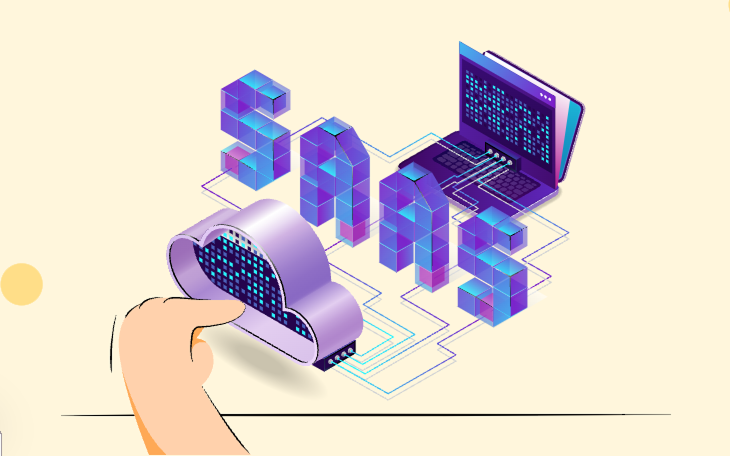
Scaling a Software-as-a-Service (SaaS) platform is one of the most significant challenges a technical founder will face. It’s a delicate balancing act: you need to handle increasing traffic without letting costs spiral out of control, while simultaneously maintaining a feature-rich experience for your users.
The Multi-Tenancy Conundrum
The foundation of any SaaS architecture is how you handle "Tenants" (your customers). There are three primary ways to handle this at the database level. First is the **Silo Approach**, where every customer gets their own database. This is great for security and compliance (essential for Fintech or Healthcare), but a nightmare for maintenance. Updating a schema for 1,000 customers means running 1,000 migrations.
The second is the **Bridge Approach**, where tenants share a database but have separate schemas. This is a middle ground that provides decent isolation while simplifying management. Finally, there is the **Pooled Approach**, where all customers share the same database tables and are differentiated by a tenant_id column. This is the most cost-effective and easiest to scale, provided you implement rigorous Row-Level Security (RLS) to prevent data leakage.
Moving to Microservices
When you start, a monolith is your best friend. It’s easy to deploy and easy to debug. But as your team grows, the monolith becomes a bottleneck. Developers step on each other's toes, and a single bug in the "billing" module can take down the "authentication" module. This is where microservices come in.
By breaking your app into smaller, independent services (e.g., Auth Service, Payment Service, Notification Service), you can scale them independently. If your notifications are backed up, you can spin up 10 extra instances of that service without touching your core API. However, microservices introduce "Network Complexity." You now need to worry about service discovery, API gateways, and distributed tracing. For most mid-sized SaaS startups in 2026, a **Modular Monolith** is often the better choice—keeping the codebase unified but logically separated.
Edge Computing and Global Latency
In a global market, "latency is the new downtime." If a user in London has to wait 300ms for a request to reach a server in Virginia, your app feels sluggish. The solution is Edge Computing. By moving your logic to the "edge" of the network (using platforms like Vercel or Cloudflare Workers), you can execute code mere miles away from the user.
The challenge with edge computing has historically been the database. However, with the rise of globally distributed databases like CockroachDB or PlanetScale, we can now keep data as close to the user as the code. This "Local-First" approach to SaaS design is drastically reducing churn for global companies by providing instantaneous feedback to user actions.
The Role of Caching
Scaling isn't just about adding more servers; it's about doing less work. Every database query you *don't* have to make is a win. Redis remains the king of the stack here. Implementing a robust caching layer for user sessions, feature flags, and frequently accessed metadata can reduce your database load by up to 80%. In 2026, we are also seeing more "Stale-While-Revalidate" patterns, where users see immediate data while the background process updates the cache for the next request.
Conclusion
Building a scalable SaaS is a marathon, not a sprint. It requires a deep understanding of data isolation, service boundaries, and global networking. By starting with a clean modular structure and choosing the right multi-tenancy model early on, you set the forge for a platform that can grow from 100 users to 100 million without melting down.